
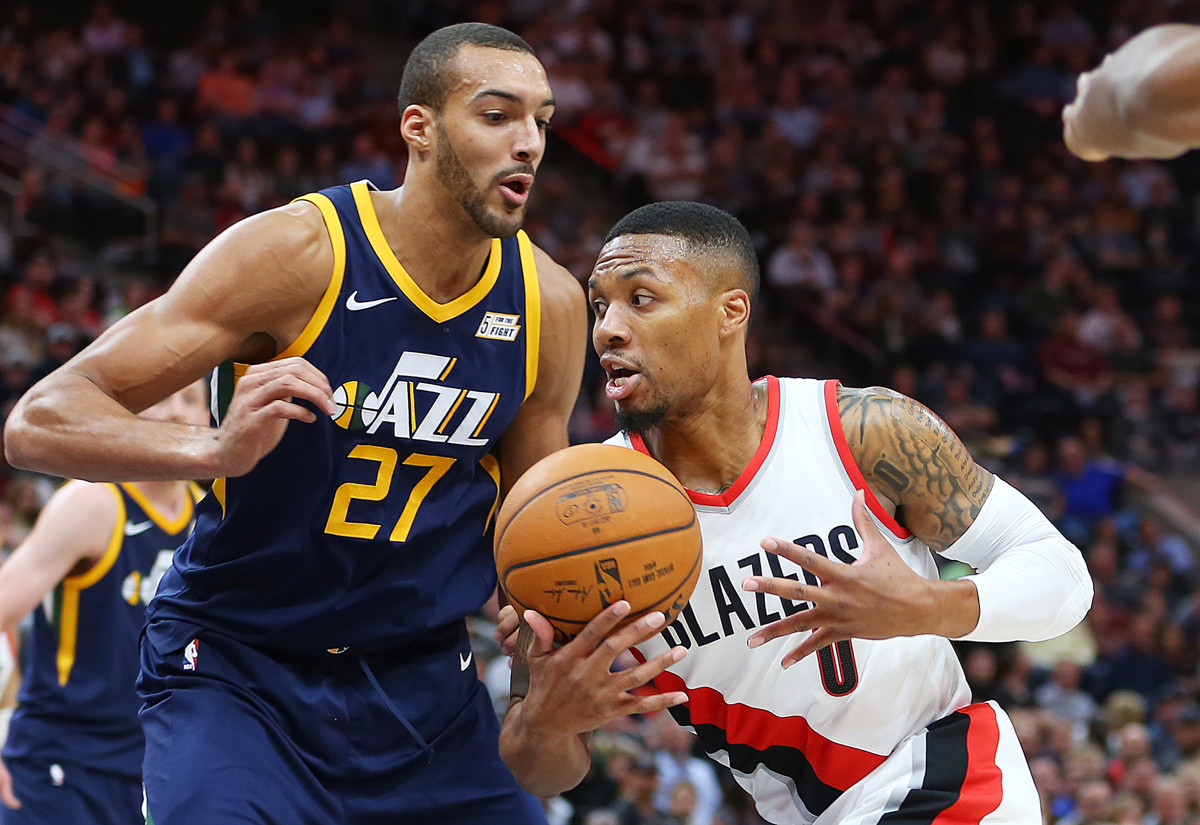
The All-NBA teams were announced last week, and it gave us a better picture of which players will be eligible for the supermax extension. Damian Lillard, Kemba Walker, Giannis Antetokounmpo and Rudy Gobert join Anthony Davis as players that can sign one in the near future. We’ll be looking at each one individually here.
First, let’s look at what makes a player eligible for said extension*:
- A player that has already or will have completed eight years in the league by the end of his current contract
- Said player has to be with the same team he was on by the end of his rookie deal. (Doesn’t have to be the team that drafted him; it can be on a team who traded for him as long as he was on his rookie deal)
- They must have been awarded one of the following: MVP in the last three seasons, Defensive Player of the Year in the last three seasons or named to an All-NBA team in the last three seasons
Kemba Walker (Charlotte Hornets, 5-year/$221m): Terrible

First off, let me start by saying that this has nothing to do with Walker’s ability as a basketball player. Kemba Walker is a great player and a franchise player for the Hornets. However, this is a bad deal for the Hornets. See, Walker enters free agency this summer after being on a $12m/year contract for the past 4 years. Even with an All-NBA caliber player on a bargain of a contract like that, the Hornets weren’t able to surround him with any type of talent.
They missed the playoffs the last 3 years and still have some of the worst contracts in NBA history on their team. The salary cap is projected to be around $109m, and the Hornets are almost over that cap already, without Walker’s contract included. They still have the right to re-sign Walker and go over the cap, but doing so would leave no room whatsoever to surround him with talent.
If Walker puts pen to paper on a huge contract, he will have to sacrifice team success for money and loyalty. Don’t blame him, it’s the Hornets’ fault. Kemba loves the city and we shouldn’t blame him for wanting a bag. It’s just that the Hornets gave out huge contracts like it was giving cotton candy to a child.
I wrote a piece earlier this month about Kemba’s situations, check it out!
Damian Lillard (Portland Trail Blazers, 4-year/$191m): Beneficial

The Blazers won’t feel this one as hard as the Hornets. Damian Lillard is on course to easily become the best player in franchise history. Add to it that the Blazers have actually been a top team in the Western conference, and you get the picture. The Blazers went to the WCF without Jusuf Nurkic, their starting center and arguably second best player, where they were swept, even after leading 3 games by 17 or more points. So clearly, there’s nothing wrong with their current core of players.
On the financial side it gets a bit tricky. The Blazers can already offer Lillard the extension now, even with 2 years remaining on his current contract. This gives the Blazers room to operate until then. They don’t have the cap space to bring in a marquee free agent this summer, but they could trade for a wantaway player or pull off a sign-and-trade for a big-name FA. If the Blazers don’t decide to do anything this summer, they have the cap space to sign a near max-player next summer.
The deal would keep Lillard with the Blazers for the next 6 years, right before he turns 35. Giving Dame the supermax wouldn’t make a huge difference for the Blazers, as the difference with the normal max is just 5% of the salary cap. That would be anywhere between $6-7m by the time Lillard’s contract kicks in, which is not enough to sign a player who’d make a big enough difference. It would be foolish to lose an MVP-caliber player just because the team wouldn’t give him an extra 5%, which is basically peanuts in the NBA world.
Anthony Davis (New Orleans Pelicans, 5-year/$240m): …

Anthony Davis has made it clear that he wants to get traded, even if it means leaving about $35m on the table. For the Pelicans is would make great sense of course, they’d be teaming up Zion Williamson (assuming he goes number one, which is basically a given at this point) with Anthony Davis. But Davis wants to leave and so it doesn’t matter what the Pelicans want to do.
Davis has 3 options. If he stays in New Orleans, he can get the aforementioned contract. If he gets traded to another team, he would be able to sign a 5-year/$205m deal next summer. If he doesn’t get traded before February’s trade deadline, he would become an unrestricted free agent next summer, where he will be able to sign a 4-year/$152m contract with any other team.
Rudy Gobert (Utah Jazz, 5-year/$247m): Not worth it

Rudy Gobert is a great defensive player, don’t get me wrong, but he’s not worth a supermax in any way, shape or form. In a game that is getting away from the big men, giving out a contract that will give Gobert $60m in his last year is a bad choice.
Yes, Gobert is a great defensive player, but his offensive game is limited. He has never averaged over 16 points per game in a season, doesn’t have a shot from 3-point land or even mid-range and struggles at the free throw line as well. His field goal percentage led the league this year, and even then, he couldn’t average 16 points a game. That just shows that Gobert isn’t being used on offense enough.
Giving Gobert a contract like that already seems foolish now, but it would look even worse when the game starts evolving towards the perimeter even more. They have the cap space to bring in a good point guard this year, and distributing the money would be wiser, definitely since Donovan Mitchell also has to get paid in not that long.
Giannis Antetokounmpo (Milwaukee Bucks, 5-year/$247m): Beneficial
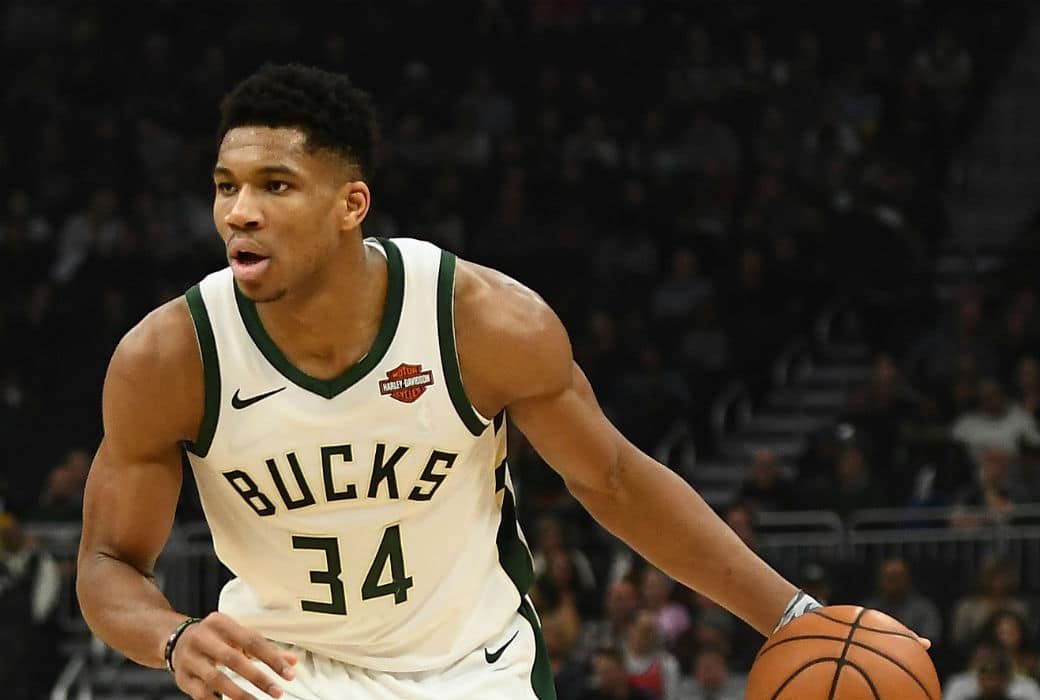
If the Bucks would be allowed to give even more money to Giannis, they would. Trust me. Giannis is the favorite to win MVP this year and is already one of the top players in the league at age 24. He’s one of the most dominant players we have in the league.
He made first team all-NBA and all-defensive, is top 3 in both the MVP and DPOY race. He’s only getting better, as he averaged career highs in points, assists, rebounds and field goal %.
Yes, this is a whole lot of money, but that shouldn’t matter. Not one player better than Giannis will land in Milwaukee for the next 20 years at least, so might as well open the bank. Losing Giannis is once again not worth the risk of gaining 5% of cap space.
 Courtside